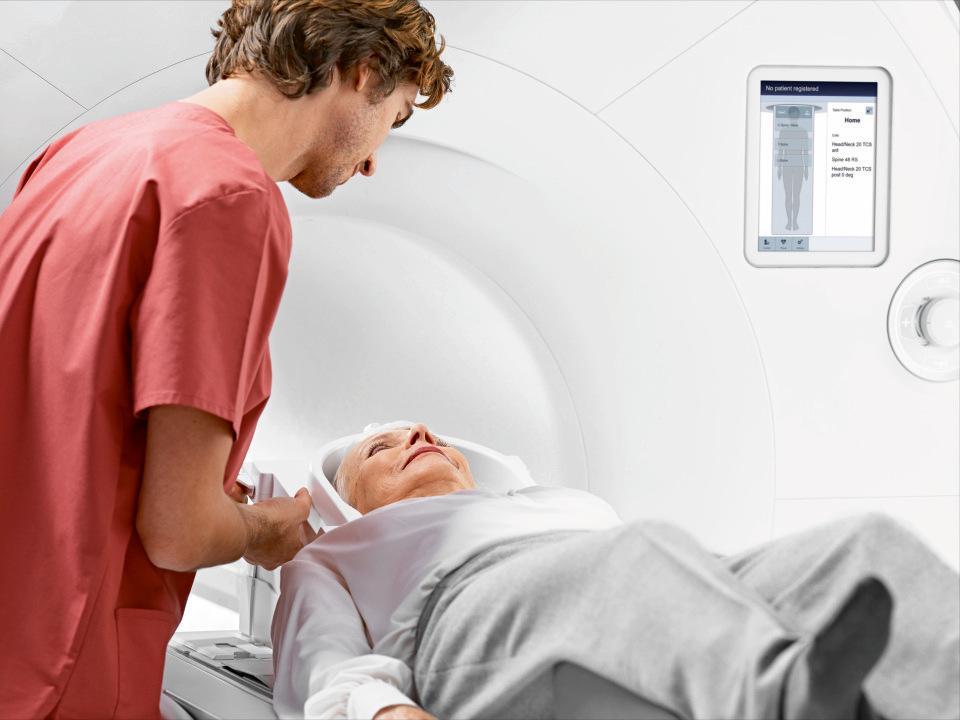
Source: Wentworth-Douglas Hospital, Dover, New Hampshire, USA.
Siemens Healthineers is to co-lead a major EU research initiative dedicated to improving the diagnosis, treatment and monitoring of Alzheimer’s Disease (AD). The project, ACCESS-AD1, aims to create a collaborative, patient-centred strategy for Alzheimer’s care across Europe. It begins in January 2026 and unites more than 30 European partners from hospitals, universities, patient organisations, and industry, representing expertise in neurology, imaging, data science, and patient advocacy. Siemens Healthineers is leading the industrial contribution to this five-year project, co-funded by the Innovative Health Initiative (IHI) – a public-private partnership between the European Union and the life-sciences industry. Clinical leadership is provided by Amsterdam University Medical Centre, while King’s College London and Gates Ventures are project co-leads. As part of an Alzheimer’s ecosystem, Siemens Healthineers is driving the development and validation of solutions for the entire AD patient pathway from blood tests for early detection up to MRI (magnetic resonance imaging) and PET (positron emission tomography) imaging for AD diagnostics and therapy monitoring.
Alzheimer’s Disease remains a major medical and societal challenge, with more than 7 million people affected in the European Union alone – a number expected to double by 20502. The impact extends to families, caregivers, and healthcare systems. While treatment has traditionally focused on symptoms, the availability of new disease-modifying therapies (DMTs) in the European Union since 2025 offers hope. However, many national health systems are constrained by diagnostic bottlenecks and limited capacity, already unable to keep up with demand for tests, imaging, and specialised follow-up care. In some countries, waiting times for these services could stretch to years unless innovations are introduced. ACCESS-AD responds to this need and accompanies the patient from diagnosis and therapy decisions to treatment and ongoing monitoring, considering insights from other AD-related IHI initiatives to foster collaboration across the field.
The initiative aims to enhance care by standardising procedures, integrating state-of-the-art industry solutions, and leveraging artificial intelligence (AI) for advanced disease management. This includes analysing medical scans, blood tests, and digital health data, helping predict treatment responses and identifying patients at higher risk of complications. In addition, the project team will collect real-world data from more than 500 patients across Europe and is running a pilot study to test combinations of drug therapies and lifestyle interventions for Alzheimer’s care.
Siemens Healthineers brings together innovation in advanced imaging, laboratory diagnostics, and digital solutions across the Alzheimer’s care pathway. “While new therapies offer real hope, diagnostic bottlenecks, limited imaging capacity, and long waiting times continue to restrict patient access,” said Dr. Christina Triantafyllou, head of research and scientific collaborations at Siemens Healthineers Great Britain and Ireland. “ACCESS-AD aims to address these challenges by translating innovation into practice by uniting industry, academia, and clinical partners to advance scalable, patient-centred solutions, from blood-based biomarkers for early detection to advanced imaging for diagnosis, therapy decisions and monitoring, helping pave the way toward earlier, more personalised and more accessible Alzheimer’s care across Europe.”
Siemens Healthineers will also lower technical, operational, and financial barriers that limit access to high-quality brain imaging in Europe, for example, by leading the development and clinical implementation of advanced MRI and PET/CT imaging solutions even beyond specialist centres. In the field of MRI, this could include compact, helium-free DryCool magnet technologies3, AI-empowered workflows and image reconstruction as well as accelerated brain-imaging protocols for significantly shortened scan times. “The ACCESS-AD initiative highlights our growing focus on disease management and our dedication to improving health outcomes,” said Graham Plant, head of diagnostic imaging at Siemens Healthineers Great Britain and Ireland. “By making advanced neuroimaging more accessible, we aim to streamline imaging workflows for Alzheimer’s diagnostics and monitoring. This empowers healthcare providers to deliver more precise, patient-centred care.”