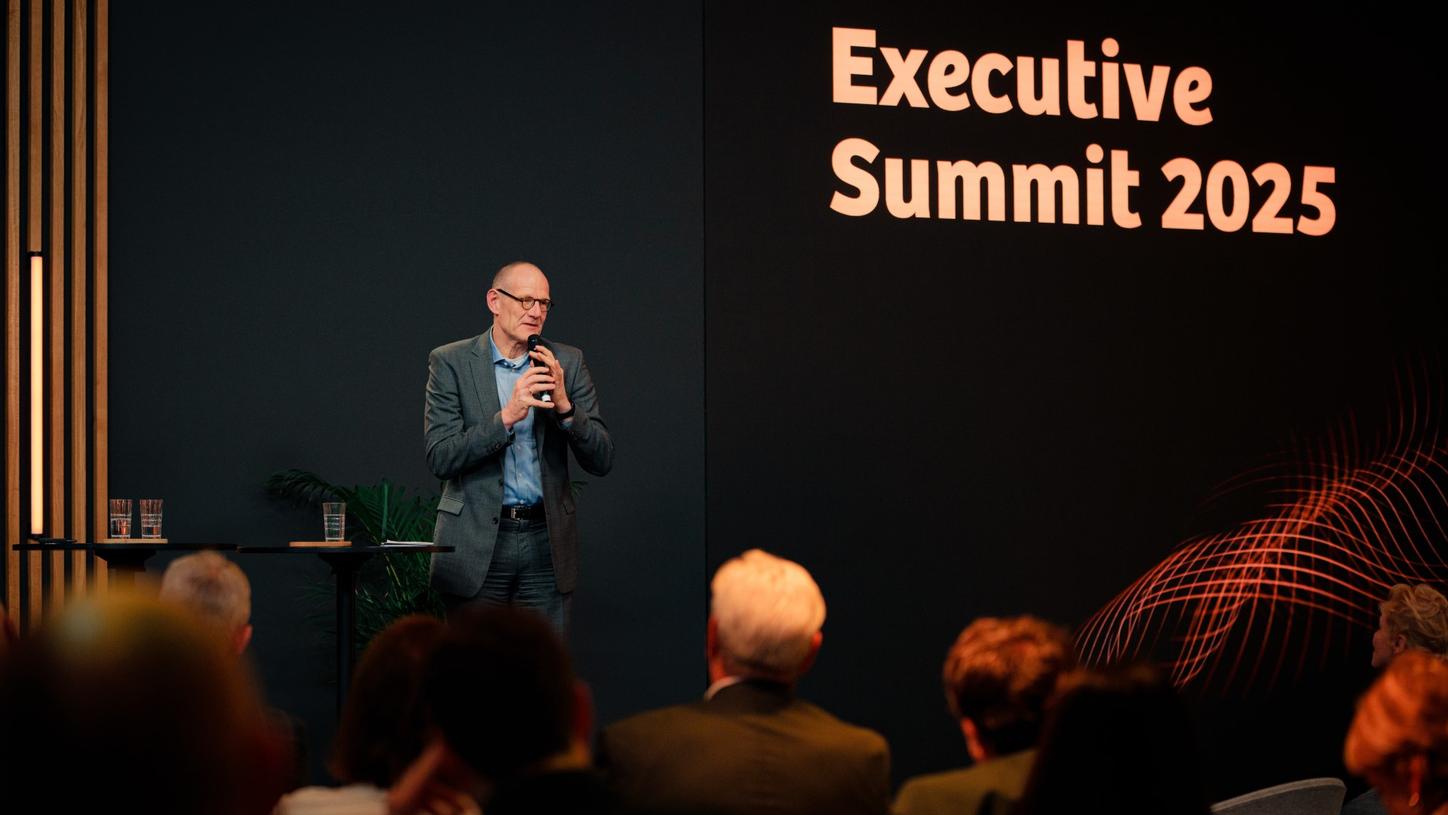
The Siemens Healthineers Executive Summit 2025 opened with a clear message: pushing beyond limitations is not optional in healthcare – it is essential. More than 160 participants from over 40 countries gathered in Munich to tackle the pressing challenges of global health systems. The Summit emphasized that while the issues may be immense, we are privileged to be in a position to solve them, turning constraint into shared purpose and
action.
Read the summary of this year’s event and access the recordings below.
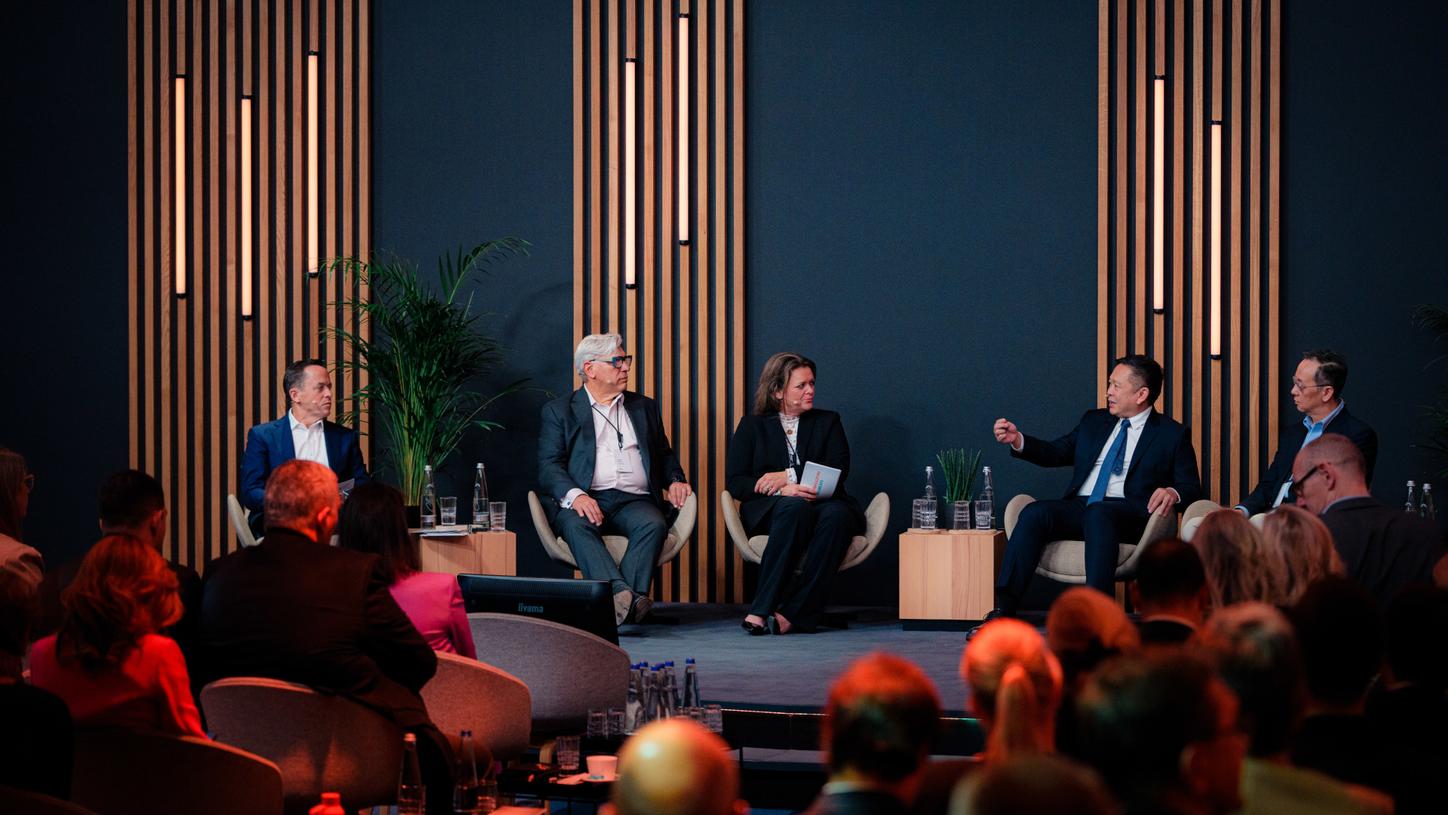
Aligning clinical and executive leadership to redefine patient care
The first Executive Summit panel, Aligning clinical and executive leadership to redefine patient care, addressed a universal truth; there is still a gap between physicians and the executive suite. Unless that gap closes, we will not be able to solve the structural problems that every health system faces such as workforce shortages, financial pressure, patient access, and clinical consistency.
The moderator of the panel, Chris Collins framed the tension like this: executives think in terms of buildings, brand, bottom line, board expectations, and risk. Physicians think in terms of patients, outcomes, urgency, and the immediate realities of care.
The panelists described two major requirements. First, that physicians must be brought into leadership, not just “consulted.” That means involving them early in strategic decisions, aligning incentives across departments, and in some cases literally putting physicians in the driver’s seat of governance.
This is already happening. Michael Rotondo, the CEO of the University of Rochester Medical Faculty Group in the USA described their system of restructuring around self-governance, letting clinicians define priorities and processes first. Lu Jiade, the Vice President of Heyou Hospital in China described his organization’s system as using departmental “triads” that combine clinical expertise, financial literacy, and operational awareness.
The second major requirement was that physicians need better visibility into the resources available and responsibility for them. Several panelists argued that modern clinical leadership means understanding cost structures, capacity, throughput, reimbursement, and return on investment.
This looks very different depending on where one is coming from. Aristo Setiawidjaja, the Special Advisor to the Minister of Health in Indonesia, explained that for his country’s healthcare system, scarcity defines everything. With 0.2 specialists per 100,000 people and hospitals often run directly by physicians, the challenge is to move from individual decision-making to multidisciplinary, data-informed care.
Marjolein de Jong, the CEO of Alexander Monro Hospital in the Netherlands, addressed similar issues of alignment between leadership, physicians, and patients. “We did not start with the CEO. We started with the patients.” De Jong described how her organization was built around the patient voice, not around legacy structures.
Across each individual system with varying resources, cultures and practices, the panelists all claimed to be experiencing generational and cultural shifts.
This panel made it clear that we will not fix access, cost, or quality unless physicians and executives act as one team.

Designed for Impact: Scaling Cancer Care in Alberta
As part of our ongoing exploration of how health systems around the world are transforming cancer care, this section turns to Alberta, Canada – a province that is redefining what it means to deliver care at scale.
Christy Holtby, Vice President of Philanthropy at the Alberta Cancer Foundation in Canada, and Brenda Hubley, Managing Director of Cancer Care Alberta, came together to explain their region’s unique and innovative model for combating cancer. The Alberta conversation focused on scale, not just doing good work but doing it fast enough, broadly enough, and consistently enough that it changes the system.
Alberta is structurally interesting, a single, public provincial healthcare system serving a population that is urban, suburban, and deeply rural all at once. Cancer care is their proving ground.
Their approach is not “buy new tech,” but rather, rethink how we work. They merged thousands of siloed data systems into one environment; then they built tools on top of that data to actually act on it.
Alberta is focused on the patient and is treating access not just as wait times, but as geography, equity, and lived reality. They openly said that speed is a moral issue in cancer. Clinician-scientist positions are intentionally designed to bridge lab and bedside. They have also set the bar that every single, eligible patient should be offered a clinical trial, regardless of where they live.
Finally, Holtby and Hubley made it clear that this work is meant to be exportable. Alberta is not just trying to fix Alberta. They are trying to build models that other systems can adopt.
Alberta is rebuilding cancer care around data, urgency, and equity.
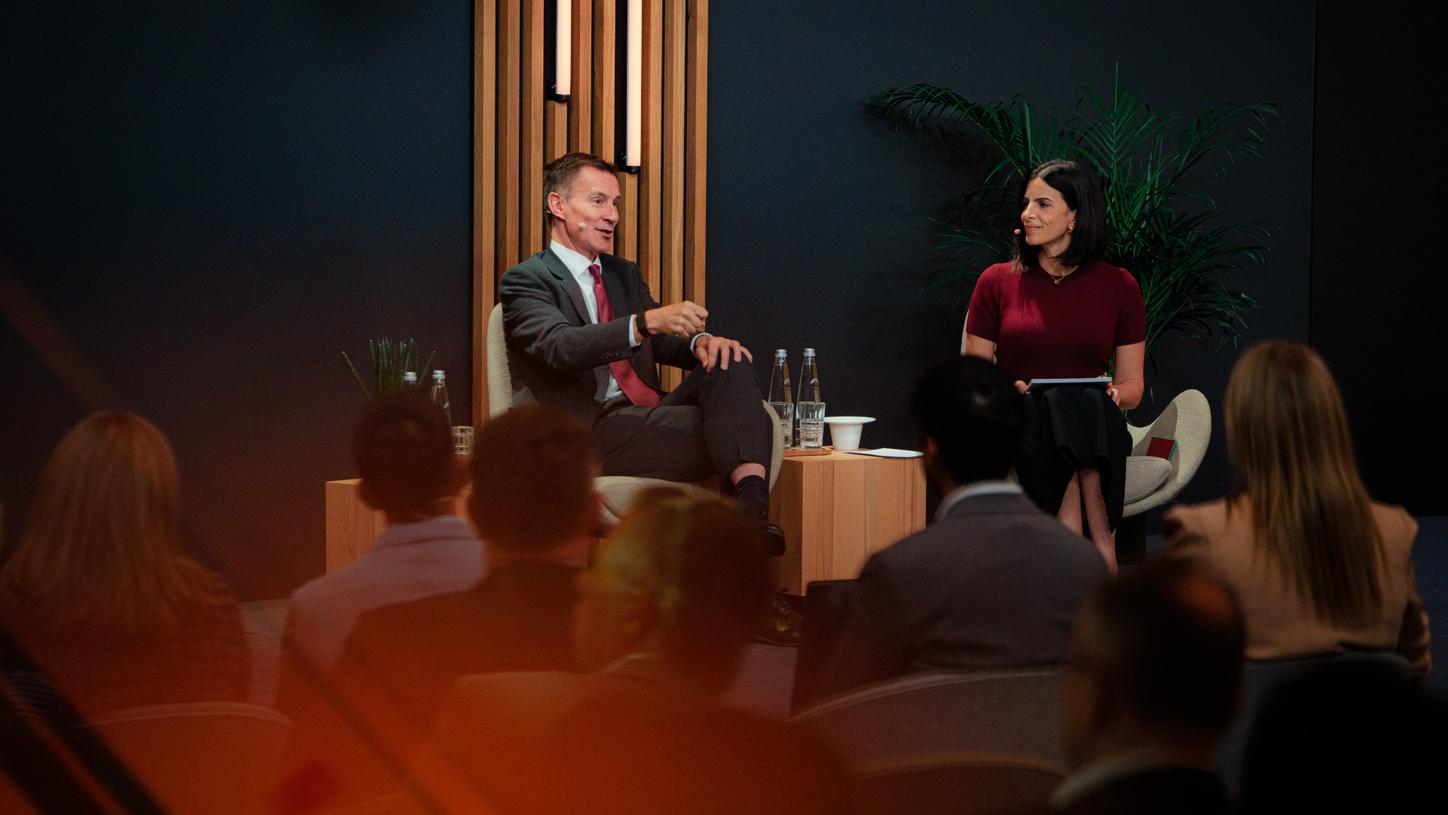
Can We Still Afford Universal Care?
At the outset of the third conversation on universal health care, moderator Ghada Trotabas, Siemens Healthineers’ Managing Director of Great Britain and Ireland, asked the blunt question, “Can we still afford this?” The answer from Sir Jeremy Hunt, former Chancellor in the UK government was, “we can’t afford not to. But we have to redefine what it takes to sustain it.”
For Sir Jeremy Hunt, universal access to care is not just policy. In the UK and beyond, it is moral identity. He explained that universal care is a central part of his country and that it will not be abandoned, but he was clear that the math is getting harder; demand keeps rising, clinical capabilities keep advancing, expectations keep expanding, and the financial base is not keeping up.
So, how do you protect universal care under those conditions?
Three ideas stood out. First, treat healthcare as an investment in economic productivity, not just a cost center. If healthier people live longer, work longer, and contribute longer, then health systems are directly tied to national economic performance. That is a language finance ministers understand.
His second central idea was that workforce and skills planning are non-negotiable. He explained that you cannot deliver universal access if you do not have people. He called out the structural failure of planning clinical workforce on a political timeline. He explained this misalignment, that training doctors takes years and politicians tend to think in terms of quarters. He proposed that there needs to be a shift towards long-term workforce planning that actively anticipates future skill needs.
His third key idea was that prevention only works if someone owns it. In budget fights, prevention is always the first thing sacrificed because it does not deliver a headline today. But prevention is also the only way to bend long-term cost curves. The argument was, we have to reframe prevention in terms of productivity, not morality. “Help people live in a way that keeps them at work, functional, and independent longer.”
Sir Jeremy Hunt brings a unique perspective to this issue, having served as both the Chancellor of the Exchequer (Finance Minister) and as Health Minister in the UK government. He emphasized that public trust is shaped on social platforms and direct channels, not press conferences. If you want people to accept reforms such as more digital triage, different access models, redesigned care pathways, you have to communicate clearly, repeatedly, at human scale.
Universal healthcare isn’t going away, but funding it the old way will no longer work.

From Innovation to Impact: Making Healthcare Work at Scale
Zoe Kyriakou, the moderator of the Executive Summit’s fourth panel, opened the discussion by explaining how the history of healthcare was focused on improving and changing lives. “We can look in the recent past of antibiotics, imaging, AI. Innovation can save lives but also comes with a cost. Today we will be discussing disruptions that are just around the corner. The disruption we want to see, how to reduce expenses at scale. Also, about how there is the technology ready, but how do we incorporate this at scale.”
This panel was about controlled disruption. The four panelists discussed their individual innovations and through this discussion, three major disruption themes emerged.
The first theme was scale without losing affordability. From India’s perspective, the challenge is almost unimaginably large. Visalakshi Chandramouli, Managing Partner of Tata Capital Healthcare Fund in India, explained that with 1.4 billion people, rapid growth in chronic disease, limited physical capacity, and a middle class expecting higher quality care, India is facing a unique situation and needs innovative and affordable solutions. The response has been to industrialize parts of care delivery, create high-volume, standardized specialty clinics, apply process efficiency, and use cross-subsidization so advanced treatments can stay accessible.
The second theme discussed among the panelists was the idea of whole-person health, not just “treat the problem.” Katie Kaney, the author and founder of Whole Person Index in the United States, proposed that if behavior, environment, social support, and personal history drive most long-term outcomes, then those factors need to be assessed, measured, and addressed as part of care. It also means accepting that traditional “clinical-only” models are structurally too narrow and too expensive.
The third central idea was that care must take place not only in the hospital; organizations must think beyond the hospital walls. Atif Albreiki, the Chief Digital and AI Officer at Dubai Health in the UAE, explained that Dubai is planning to pilot monitored, technology-enabled care at home for patients who would historically be admitted. The purpose is to increase capacity inside hospitals and improve patient experience.
There was also a candid warning about AI. Nicholas Stavros, the CEO of Community Medical Services in the U.S., explained that one cannot simply replace clinicians. Leaders need to let them work at the top of their license by automating what can safely be automated, removing administrative and analytical burdens to improve patient care.
Albreiki stated that a central part of creating innovative disruption is to not overanalyze yourself into paralysis. Pilot, measure, adjust, keep moving.
This panel showed that innovation in healthcare must mean cheaper care at scale, care that follows the patient home, and care that treats the whole human, not just the diagnosis code.

Adaptive Leadership and Cultural Change
This conversation was not about technology. It was about bringing structural change. Eric Conley, EVP, President von Acute & Post-Acute Care at Sentara Health in the U.S. and Malene Fischer, Deputy Chief Executive of Rigshospitalet in Denmark, came to the panel with different strategies towards restructuring their organizations, but both communicated the same idea: the structure that got us here will not get us where we need to go.
From Denmark’s side, the message was surprising in its honesty. They have had years of success, better quality, more specialization, more investment, more staff. But that success is not sustainable. The model has been “add, add, add” more beds, more services, more everything. The new model is “focus, narrow, move care out of the hospital.” Fewer beds. Care at home. Different clinician profiles. A redesigned pathway that looks at the entire patient journey, not just their time in the ward.
From the U.S. side, the conversation was about structural courage. Conley openly said, “we could not become a value-based organization without breaking our own internal hierarchy.” Conley and his team decided to remove a layer of leadership, restructure regions differently based on their realities instead of pretending they were the same, and then build trust through relentless transparency. The idea was that the healthcare staff will accept system disruption if they understand the why, see the logic, and believe you respect them.
Both perspectives point to a new style of leadership required for bringing about significant restructuring in today’s healthcare. They explained that you cannot wait for perfect alignment. And that you cannot “communicate once.” You have to constantly explain why the change is happening.
The leadership panel made it clear that transformation is not just technical, it is human. Systems are cutting beds, redesigning roles, moving care home, and collapsing hierarchy – and none of that works without trust.
About the Siemens Healthineers Executive Summit
The Siemens Healthineers Executive Summit is an exclusive, invitation-only event and community that brings together the world’s leading healthcare minds to share their strategies, experiences, and forward-thinking ideas. By connecting influential CEOs from healthcare systems around the world, we create a network of knowledge sharing; and by gathering in one place, we build the momentum to influence decisions and truly change the future of healthcare.